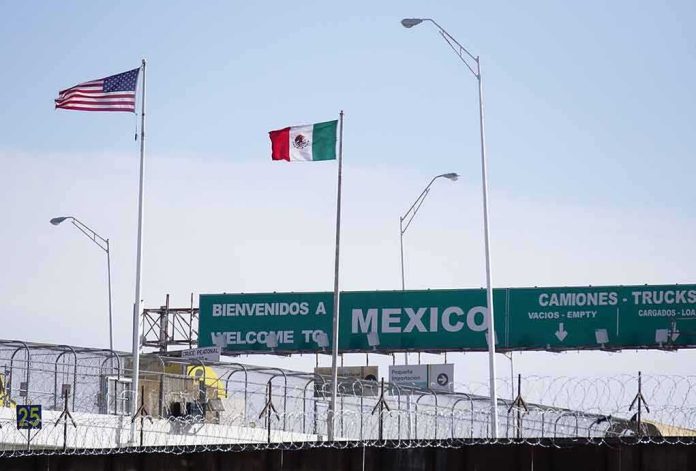
Facing a specific threat, the United States halted government operations and travel to Mexicali for August 25 and warned Americans to avoid government buildings there.
Story Snapshot
- U.S. Embassy alert paused government activity and official travel in Mexicali on August 25.
- Americans were told to avoid government buildings and be ready to seek shelter if an incident occurs.
- The warning fits a pattern of short-notice, local security alerts in Mexico tied to rising risk.
- Mexico remains a Level 2 advisory country: exercise increased caution due to crime, kidnapping, and terrorism.
What the U.S. Government Ordered in Mexicali
U.S. Embassy officials announced a targeted security alert for Mexicali, Baja California, effective August 25. The alert suspended U.S. government activities in the city and stopped official travel there for the day, citing threat information. The notice told U.S. citizens about a potential threat and advised them to avoid government buildings in Mexicali. The alert urged people to be ready to seek shelter if an incident occurs and to follow official guidance from authorities.
The consular system often limits details in real time to protect sources and methods. That practice can frustrate travelers who want specifics, but it reflects how security teams act on time-sensitive intelligence. The embassy’s alert did not list suspects or motives. It focused on steps to reduce risk for one day. That narrow window shows how these actions aim to get through a spike in risk and then reassess conditions as agencies collect more information.
How This Fits the Bigger Security Picture in Mexico
The State Department currently lists Mexico at Level 2, which means travelers should exercise increased caution countrywide due to terrorism, crime, and kidnapping. That national guidance is broad and ongoing. Local alerts like the Mexicali notice are more precise and time-bound. They flag a short-term spike on top of the base risk level. This two-layer system lets officials warn the public quickly while keeping the wider advisory stable for longer periods.
Past security notices show a pattern of rapid, local actions when risk rises. Earlier alerts instructed people in parts of Mexico to shelter in place during security operations and road blockages. Those steps aimed to keep people off targeted roads and away from flashpoints until calm returned. The Mexicali alert fits this model: a fast, focused response to a specific threat window, with advice that is simple, direct, and easy to follow on short notice.
Why Both Sides of the Aisle Care About This
Border security and public safety concerns unite many Americans across party lines. People on the right see these alerts as proof that cartels and cross-border crime still threaten order and drive drug flows. People on the left see a system that struggles to protect everyday travelers and migrant families caught near danger zones. Both groups see a federal response that often feels reactive and opaque, which fuels a sense that large institutions are not solving root problems.
The US Embassy in Mexico has issued an urgent security alert for Mexicali near the US border, citing a potential threat and urging travelers to exercise caution.https://t.co/OZ1nREMpzy
— The Traveler (@thetraveler_org) August 25, 2026
Concrete steps can help travelers today. People in Mexicali should map alternate routes that avoid government buildings, stay near hard cover if an incident occurs, and keep phones charged with alerts on. Families should set a simple check-in plan. Businesses with staff in the city should pause nonessential movement and review muster points. These small moves buy time and cut exposure when officials say the risk is elevated, even for a limited period.
What to Watch Next
Officials may lift, extend, or localize the alert as new reporting arrives. Travelers should monitor embassy channels for updates and watch for any road closures tied to security operations. If officials later share more detail, that can clarify whether the threat was criminal rivalry, planned attacks on official sites, or something else. Regardless, the larger trend is clear: risk around key border hubs can spike fast, and timely alerts are now a standard tool to manage those moments.
Sources:
insiderpaper.com, osac.gov, mexiconewsdaily.com, kyma.com