

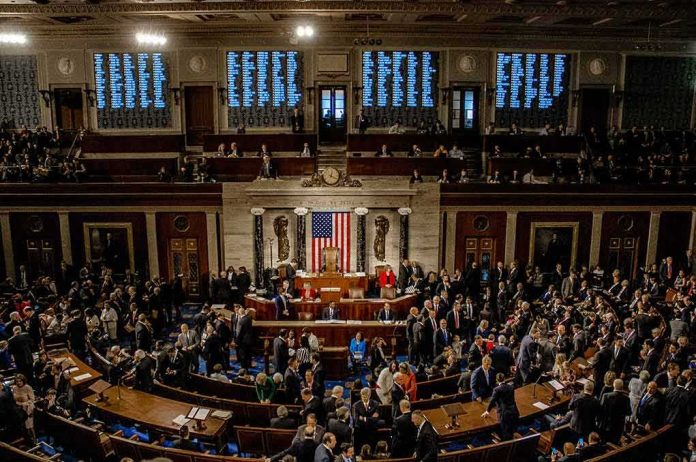
Behind closed doors, House Democrats handed Hakeem Jeffries a 251–11 nomination for Speaker, but the real test comes on the House floor.
Story Snapshot
- Democrats nominated Jeffries 251–11 in a secret caucus vote as their Speaker choice.
- Jeffries ran unopposed and has led House Democrats since 2023.
- If elected by the full House, Jeffries would be the first Black Speaker.
- Eleven dissenters highlight unresolved progressive demands and future floor risks.
What Democrats Did: A Lopsided Nomination With Historic Stakes
House Democrats nominated Hakeem Jeffries for Speaker in a closed-door vote, 251 to 11, while he faced no internal challenger. Reporters from National Public Radio, CBS News, and the Washington Examiner each confirmed the same tally and process. Jeffries, who has led his party in the House since 2023, would become the first Black Speaker if he wins on the House floor next year. The vote followed Democrats gaining a majority, which gives the choice real governing weight rather than symbolism.
Jeffries officially declared his bid on November 4 in a written letter to colleagues. The letter asked members for support to become the fifty-seventh Speaker of the House and laid out his request in formal terms. That step documented his intent and gave members a clear anchor for their decision. The nomination result now positions him as the party’s standard-bearer heading into the new Congress, when the House must elect a Speaker by majority vote of the full chamber.
What Still Stands Between Jeffries And The Gavel
Jeffries must turn a caucus win into at least 218 votes on the House floor. The caucus result shows strong backing but does not guarantee success in the public roll call. Eleven Democrats voted no in the private tally, leaving open questions about their terms for support. Reports describe the vote as secret and member-by-member positions as undisclosed, which limits public insight into any concessions or pledges that may be at play before the floor election.
Progressive dissent centers on two policy fronts: health care and the Israel-Gaza war. Coverage described seven progressive newcomers who said they voted no while seeking a pledge for a vote on Medicare for All and action to end what they called the genocide in Gaza. They said talks made “meaningful progress” but more work remained. Public protests also demanded government-funded health care and an arms embargo on Israel during a recent Democratic event featuring Jeffries.
Why The Fight Matters To Both Sides Of A Frustrated Country
Americans on the right and left see a government that rarely delivers. This episode shows how power can hinge on private deals that voters cannot see. Democrats achieved a commanding nomination for Jeffries, yet a small internal bloc is pressing for concrete votes and limits on foreign arms. That mirrors wider anger at leaders who, people feel, protect their positions first and place hard choices second. The gap between caucus unity and floor certainty feeds that doubt.
Hakeem Jeffries Wins House Democrats’ Speaker Nomination With 251 Votes https://t.co/hWZJDGmUon
— HeadlinesXtra US (@eheadlyn) November 18, 2026
History suggests this kind of dissent is not rare in today’s Congress. Research from the Congressional Research Service shows many modern Speaker elections include members voting against their party’s nominee. That trend breaks with mid-twentieth-century norms of strict party loyalty. The practical point: even when a party appears united in private, a handful of public defections can force deals, slow the agenda, or, in tight margins, stall the chamber at the start of a session.
What To Watch Next: Numbers, Promises, And Paper Trails
Watch three things. First, count firm public commitments for Jeffries from every Democrat and any possible cross-party votes. Second, look for written agreements on floor votes for health care or limits on arms transfers related to Israel, since verbal nods can fade fast. Third, track whether dissenters claim clear wins after negotiations, or if they hold out during the floor vote. These signals will show if the caucus lands unity or opens the new Congress with friction.
Sources:
redstate.com, npr.org, abcnews.com, jeffries.house.gov, people.com, washingtonexaminer.com, nytimes.com, cbsnews.com, wfla.com, cnn.com