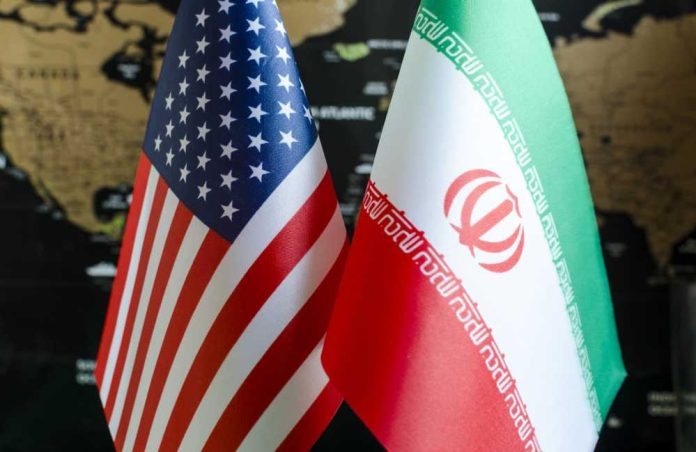
As Washington and Tehran prepare for new talks in Pakistan, the fate of war, sanctions, and global energy prices is being hammered out by people many Americans no longer trust.
Story Snapshot
- Fresh United States–Iran talks are expected in Islamabad, Pakistan, with sanctions, frozen assets, and nuclear limits on the table.
- A previous “historic” round in Pakistan ran for more than a day and still ended without a deal, showing how deep the conflict runs.
- Both sides are pushing clashing demands on uranium enrichment, sanctions relief, and control of the Strait of Hormuz, making a real peace agreement hard to see.
- Pakistan is trying to mediate between Washington and Tehran, but outside players like Israel and regional rivals are pulling the talks in different directions.
New Talks in Pakistan: What Is Confirmed So Far
Iranian officials say the next round of United States–Iran talks is expected to take place in Islamabad on a Monday, with both delegations arriving in Pakistan the day before. These meetings come after months of war, a fragile ceasefire, and a blockade that has choked Iran’s ports and rattled world markets. Reports from Al Arabiya and others say the agenda centers on sanctions relief, frozen Iranian assets abroad, and nuclear questions, all issues that hit ordinary people through jobs, prices, and basic security.
Washington has not fully confirmed the schedule, and the White House press office has stressed that nothing is official until it is announced there. That uncertainty itself is part of the story. For many Americans, it fits a pattern where major decisions on war, sanctions, and energy get shaped in secret rooms overseas and only later filtered through friendly media sound bites. Pakistan, meanwhile, is presented as the likely host again, with its leaders trying to keep the process alive and prevent another slide into full-scale conflict in the region.
The Islamabad Memorandum and Why the First Round Failed
Earlier in this cycle, United States and Iranian negotiators held what was called a “historic” in‑person meeting in Islamabad that stretched past midnight and totaled about 21 hours of talks. That round ended without an agreement, even though both sides were working under a 60‑day ceasefire framework known as the Islamabad Memorandum of Understanding. According to reports, that framework aimed to reopen the Strait of Hormuz, extend the ceasefire, and set a path to deal with Iran’s nuclear program, especially highly enriched uranium stockpiles.
The failure of those April talks highlights how far apart the two governments remain. Iran’s side laid out “red lines” that included compensation for damage from United States–Israeli strikes and the release of frozen assets. The United States side pushed a fifteen‑point proposal that demanded strict limits on Iran’s nuclear program and reopening the Strait of Hormuz, along with curbs on support for armed groups. Iran rejected those terms, and both sides left Islamabad without a deal, with only the fragile ceasefire to show for their effort.
Money, Nukes, and the Strait: The Hard Core of the Dispute
At the heart of the talks are three linked fights: nuclear enrichment, sanctions and frozen money, and control over one of the world’s key oil chokepoints. United States officials want Iran to stop or sharply limit uranium enrichment, reduce or move its highly enriched uranium out of the country, and accept tight checks on nuclear sites, in exchange for phased sanctions relief. Iranian leaders insist on their right to civilian nuclear technology and have warned that if Washington demands detailed limits on highly enriched uranium from the start, no agreement is possible.
On money, Iran is pressing for broad lifting of sanctions and release of large frozen assets, with some reports pointing to figures near $100 billion or more locked up abroad. United States proposals talk about “phased relief linked to compliance,” which means Tehran would only get full economic breathing room if it passes each step that Washington sets. That kind of step‑by‑step deal can look like common sense to Western officials, but to many Iranians, and to critics of the “deep state” at home, it feels like a system designed to keep Iran on a short leash forever.
Pakistan’s Mediation and the Shadow of Other Powers
Pakistan has stepped in as a key go‑between, hosting talks in Islamabad and sending senior leaders to Tehran to keep the channel open. Its role as mediator matters because neither Washington nor Tehran trusts the other enough to sit down without a friendly third party in the room. Reports say the Islamabad Memorandum includes plans for a High Level Committee to watch over any agreement and oversee security in the Strait of Hormuz and in Lebanon, where fighting has also been intense.
At the same time, Saudi‑owned outlets like Al Arabiya and i24news have shaped much of the public story, often stressing nuclear and sanctions angles that match Saudi and United States interests. Israel and its allies are also reported to be working to block rapid lifting of sanctions or deals that could boost Iran’s power in the region. For readers who already feel that a small circle of elites and foreign lobbies drive United States policy, this looks less like a clean peace process and more like another crowded bargaining table where ordinary Americans and Iranians have no real voice.
What It Means for Americans on Both the Right and the Left
These talks are not just distant diplomacy. They touch energy prices, military spending, and the risk of a wider war that could pull in United States forces again. The United States Energy Information Administration notes that Iran is a major oil producer whose exports affect global supply and prices. If the Strait of Hormuz stays threatened or closed, families in Ohio or Texas feel it at the gas pump and in higher costs for food and goods shipped worldwide.
Conservatives who are tired of endless wars and globalist entanglements see another round of secret negotiations that may trade away leverage while doing little to secure borders or cut federal waste. Liberals who worry about human rights and inequality see a process where sanctions crush ordinary Iranians while defense contractors and oil traders profit from chaos. Both sides share a growing sense that decisions about war, peace, and trillions in assets are made by a tight circle of officials, bankers, and foreign powers who face few consequences when deals fail.
Fragile Process, High Stakes, and a Deep Trust Gap
Experts who track United States–Iran relations say these talks fit a pattern: indirect or third‑party meetings that report “progress” but rarely produce lasting, comprehensive agreements. Studies from research centers describe a “perceptual divide” between Washington and Tehran. Iran says it wants limited, practical arrangements that stop bombing and lift core sanctions. The United States wants a broad, permanent deal that can be sold at home as a clear win, especially on nuclear limits.
Until that basic clash is fixed, each new date on the calendar — whether July 11 or another Monday in Islamabad — is less a promise of peace and more a reminder of how stuck the system is. For Americans who already believe the federal government answers more to donors, foreign lobbies, and unelected security officials than to voters, this new round of talks may feel like one more chapter in a story where the stakes are huge, the room is closed, and the people paying the price are nowhere near the table.
Sources:
redstate.com, i24news.tv, dawn.com, globaltimes.cn, pbs.org, reuters.com, en.wikipedia.org, youtube.com, aljazeera.com, timesofindia.indiatimes.com, facebook.com, eia.gov, europeanleadershipnetwork.org