

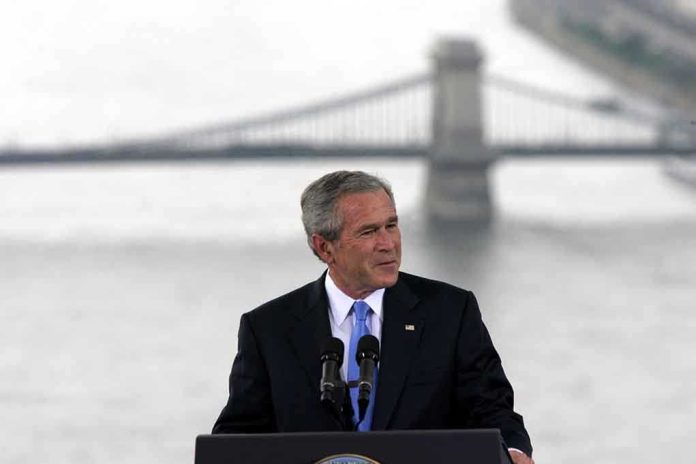
Twenty-five years after 9/11, George W. Bush used his own words and records to frame what the attacks changed—and what the country chose to do next.
Story Snapshot
- Bush revisited his first 9/11 statements and later addresses to track America’s response.
- He tied early unity and resolve to long-term security policy and national memory.
- This year’s ceremony draws several former presidents; the White House is represented by Vice President JD Vance.
- Researchers say strong emotions shape public memory, often more than precise recall.
What Bush Said On 9/11 and In the Days After
On the morning of the attacks, President George W. Bush told students and reporters in Sarasota that the nation faced an “apparent terrorist attack.” He said he had spoken with top leaders and ordered full federal support for victims and the investigation. That night, he addressed the nation from the White House, promised to hunt down those responsible, and pledged that America would meet the threat together. Nine days later, he spoke to Congress and outlined a broad response.
At Ground Zero days after the attacks, Bush praised rescue workers and spoke of national grief and resolve through a bullhorn, a moment many remember for its tone of unity. His early words formed the spine of a public story about strength, sacrifice, and duty. Those themes echoed in later messages each anniversary, as he urged the country to honor the dead, support the families, and stay alert to new dangers that might arise from the same hate.
How Those Words Shaped Policy and Memory
In the months and years after 9/11, the Bush administration tied that unity to new security steps at home and a global fight abroad. Bush’s later addresses linked the attacks to the “War on Terror,” argued for military action, and pushed changes to protect the homeland, including new federal structures and tools. The fifth-anniversary address defended hard choices in Iraq and Afghanistan, while honoring troops and first responders who carried the burden of those policies.
Scholars note that these speeches helped form a shared memory of 9/11 that stressed American resolve and purpose. Researchers also find that people often feel high confidence about such intense memories, even as fine details fade or shift over time. The emotional force lasts, and it shapes how events are recalled and taught to the next generation, sometimes more than exact timelines or wording do.
The 25th Anniversary: Ceremony, Attendance, and Civic Signals
The twenty-fifth anniversary brings a familiar ritual: reading names, moments of silence, and official remarks in New York, at the Pentagon, and in Pennsylvania. Former Presidents Joe Biden, George W. Bush, Barack Obama, and Bill Clinton are expected at the Ground Zero ceremony, according to major outlets. Vice President JD Vance is slated to represent the White House at the New York event, reflecting the administration’s formal presence there.
🚨 BREAKING: Biden, Obama, George W. Bush, and Bill Clinton will stand together at Ground Zero for the 25th anniversary of 9/11.
Trump will reportedly be the only living former president absent, after organizers allegedly refused to let him give a speech.
A historic moment. pic.twitter.com/7gMBU5134w
— haseebfud (@haseebfud) September 3, 2026
Anniversaries spotlight a tension that many Americans share. People on the right and left fear that leaders use trauma to score points or protect their power. Bush’s reflections revisit choices that expanded government reach, increased surveillance, and sent troops into long wars. Supporters call those steps necessary after a mass murder on our soil. Critics worry the costs—money, lives, and freedom—grew too large and outlasted clear goals. Both concerns track with the record and the research.
Why This Reflection Matters Now
Today’s security map, civil liberties debate, and veterans’ needs all flow from decisions linked to that week in 2001. Bush’s original remarks show how fast the federal government can move when danger is clear. They also show how the story we tell later can guide what we fund, what we fear, and what we forgive. Marking twenty-five years is not only about sorrow. It is about measuring the trade-offs we made and deciding which ones still serve the public interest.
Sources:
youtube.com, abcnews.go.com, presidency.ucsb.edu, govinfo.gov, georgewbushlibrary.gov, usatoday.com, yahoo.com, works.swarthmore.edu