
A single, murky attack report just 11 miles off Iran’s coast is enough to rattle a chokepoint that keeps America’s gas prices—and the world economy—on a tight leash.
Quick Take
- A northbound bulk carrier reported being attacked by multiple small craft near the Strait of Hormuz, according to the UK Maritime Trade Operations.
- UKMTO said the crew was safe, with no injuries and no environmental impact reported, but urged ships to transit cautiously while the incident is investigated.
- The episode lands amid a U.S.-enforced naval blockade on Iranian ports and a wider U.S.-Israel-Iran conflict that has already produced a pattern of maritime incidents.
- No group publicly claimed responsibility, and the ship was not identified—leaving markets and mariners to operate with limited clarity.
UK Maritime Alert Flags an Attack Near Sirik, Iran
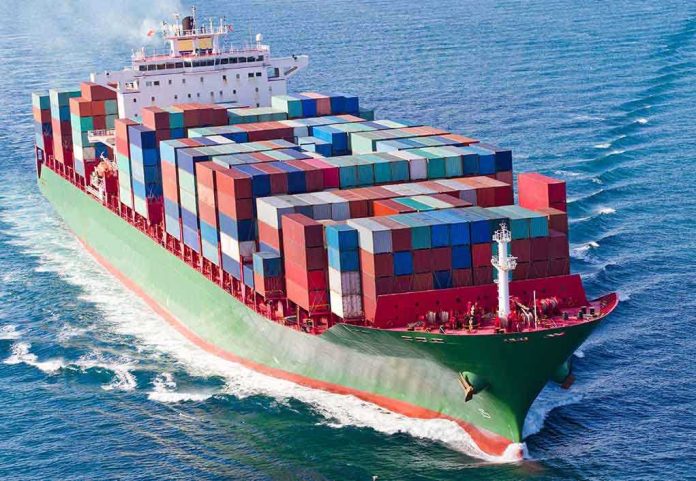
UK Maritime Trade Operations reported that a northbound bulk carrier said it was attacked by multiple small craft roughly 11 nautical miles west of Sirik, Iran, near the Strait of Hormuz. UKMTO said all crew members were safe, with no injuries reported and no environmental impact reported. UKMTO also advised nearby vessels to transit with caution as authorities investigate what happened and who was behind it.
The limited detail matters because the Strait of Hormuz is not a random patch of water; it is a narrow global artery that can amplify small incidents into major price shocks. The research provided describes the strait as a key route for a significant share of global oil trade, and it has a long history of harassment tactics—especially fast boats—dating back to the Iran-Iraq “Tanker War” era. Those precedents make even “no damage reported” events operationally serious.
Blockade Pressure Collides With Asymmetric Sea Tactics
The reported attack comes during a period of U.S. pressure on Iran that includes a naval blockade aimed at restricting Iranian port activity and oil revenue. In the same timeframe, the research notes U.S. forces seized an Iranian-flagged ship accused of trying to evade the blockade, an action described as the first interception of its kind during this phase. That mix—economic strangulation and hard interdiction—raises incentives for disruption and deniable, low-cost harassment at sea.
Iran has historically used small boats to challenge larger navies and to complicate shipping in crowded waterways, and the research also describes Iranian demands affecting passage—such as toll requirements for some ships and a permanent bar on Israeli-linked vessels. Even if every claim is not independently verified in public reporting, the overall picture is clear: control of transit is being treated as leverage. For everyday Americans, leverage over transit translates into leverage over energy costs and inflation expectations.
Why “Unclaimed” Incidents Still Move Markets and Policy
No public claim of responsibility was reported, and UKMTO’s role is to share safety alerts, not assign blame. That neutrality is important, but it does not remove the practical consequences. When crews are told to transit cautiously, insurers, ship owners, and charterers start pricing in delay and risk. Conservatives who already distrust globalized supply chains will recognize the vulnerability: one strategic chokepoint, thousands of miles away, can ripple into domestic prices—regardless of who sits in the Oval Office.
Ceasefire Strains and the Politics of “Who Enforces What”
The research describes a tense political backdrop: President Trump publicly judged Iran’s peace proposal as inadequate and framed ongoing attacks as violations. The same research says the situation is unfolding with peace talks expected in Pakistan and with a ceasefire timeline under strain. This creates a familiar Washington dilemma—use force to deter attacks while trying to avoid a wider escalation. Democrats may criticize enforcement actions as provocative, while Republicans argue deterrence is meaningless without consequences.
BREAKING: A large cargo ship reports being attacked by multiple small boats in the Strait of Hormuz just 11 miles from Iran's coast. pic.twitter.com/t28KVThfsk
— GBX (@GBX_Press) May 3, 2026
What is still unknown is just as important as what is known. The ship was not identified in the provided material, the damage details were limited, and attribution remains unresolved. That uncertainty is not a minor footnote; it is the environment decision-makers must navigate. For voters frustrated with “forever conflicts” and bureaucratic failure, this is another test of whether the federal government can protect U.S. interests—energy stability, maritime commerce, and deterrence—without drifting into open-ended entanglement.
Sources:
Cargo ship attacked by small craft near Strait of Hormuz, UK maritime agency says