A sitting U.S. president just called the pope weak on crime and a foreign policy disaster, igniting a clash between executive power and moral authority that could reshape American Catholic politics for a generation.
Story Snapshot
- President Trump attacked Pope Leo XIV on Truth Social, calling him “WEAK on Crime, and terrible for Foreign Policy” on April 12, 2026
- The feud erupted over Leo’s criticism of the U.S.-Israeli war on Iran, immigration crackdown, and Venezuela policies
- Trump claimed the Church elected the American-born Leo specifically to oppose his presidency
- Pope Leo responded defiantly with “no fear of the Trump administration” while visiting Africa to promote peace
- Over 50 million U.S. Catholics now face a choice between presidential authority and papal leadership
When Presidents Attack Popes
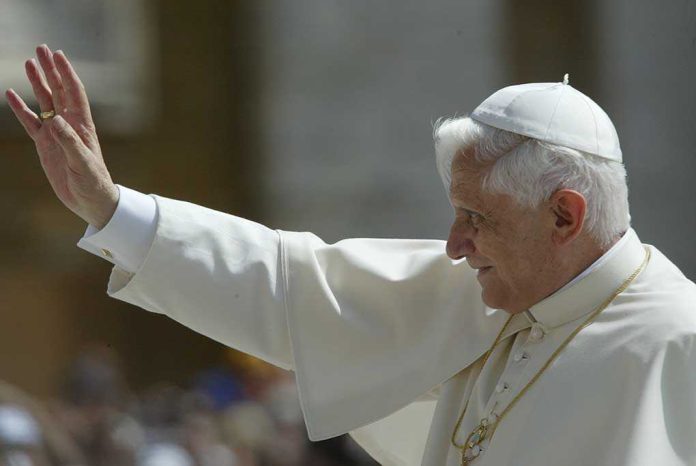
Trump unleashed his criticism late Sunday night after Pope Leo XIV spent Palm Sunday in St. Peter’s Square condemning U.S. threats against Iran as “truly unacceptable” and labeling the conflict “atrocious.” The president didn’t stop at policy disagreements. He accused Leo of supporting Iran’s nuclear ambitions, opposing justified actions against Venezuelan drug traffickers, and undermining his immigration enforcement. Trump told reporters upon returning to Washington that he’s “not a big fan” of the pontiff, calling him “very liberal” and crime-tolerant.
The attack represents an extraordinary escalation in church-state tensions. Trump shared an AI-generated image of himself in a Christlike pose on Truth Social, a symbolic power move that stunned observers. He cited Pope Leo’s meetings with David Axelrod, whom he labeled an “Obama sympathizer,” as proof of the Vatican’s left-leaning agenda. The president urged Leo to “get his act together” and “stop catering to the Radical Left,” framing the dispute as a battle between voter mandates and religious interference.
The American Pope Trump Didn’t Want
Pope Leo XIV’s election in 2025 came shortly after Trump’s inauguration, a timing the president finds suspicious. Trump asserts the Catholic Church chose an American pope specifically to “deal with” his presidency, inverting the concept of Vatican independence into a calculated political maneuver. Leo has indeed proven a persistent critic, condemning leaders with “hands full of blood” in reference to the ongoing U.S.-Israeli war on Iran. He opposed Trump’s Venezuela military actions, which the administration defends as necessary responses to drug trafficking and the release of prisoners into American communities.
The pattern echoes Trump’s 2016 clash with Pope Francis, who questioned Trump’s Christianity over his immigration policies. That earlier conflict demonstrated how populist executives and moral authorities can collide when national sovereignty meets universal humanitarian doctrine. Leo appears determined to follow Francis’s path, using his African peace tour to amplify criticisms while Trump governed from Washington. The Vatican’s consistent anti-war, pro-migrant stance runs headlong into Trump’s hardline approach on both fronts.
Catholic Voters Caught in the Crossfire
The feud places America’s Catholic community in an impossible position. Trump won significant Catholic support by promising tough crime policies and immigration enforcement, the very issues Leo condemns. Catholics rebuked Trump on social media following his attack, but many conservative believers share Trump’s frustration with what they perceive as Vatican overreach into partisan politics. The president positions himself as defending Americans against elite moral posturing that ignores real concerns about crime, drugs, and border security.
Leo’s defiant response carries weight with the faithful who view papal authority as transcending political considerations. His declaration of fearlessness toward the Trump administration resonates with Catholics who believe moral leadership should challenge power rather than accommodate it. Yet Trump’s voter mandate argument holds appeal for Americans who elected him precisely to reject establishment voices, whether in media, academia, or religious institutions. The collision tests whether tribal political loyalty or religious identity proves stronger.
What Happens When Neither Backs Down
Short-term consequences include heightened polarization among Catholic voters and strained diplomatic relations between Washington and the Vatican. Trump’s base may rally around his rejection of perceived liberal interference, while practicing Catholics face pressure to choose between their president and their pope. The dispute amplifies broader culture war battles over immigration and crime, giving both sides fresh ammunition.
Long-term implications could prove more significant. Sustained papal criticism might erode Trump’s support among the Catholic electorate, a substantial voting bloc in swing states. Vatican-U.S. cooperation on global issues like nuclear non-proliferation faces new obstacles when the president dismisses papal warnings as political theater. The feud establishes a precedent for future conflicts between populist leaders and religious authorities, potentially reshaping how Americans view the relationship between democratic mandates and moral leadership. Trump’s claim that Leo’s election targeted his presidency remains unverified by Church sources, yet the assertion itself reveals how deeply he views institutional opposition as coordinated resistance rather than principled disagreement.
Sources:
CBS News: Trump calls Pope Leo “weak on crime” and criticizes Iran policy on Truth Social
Channel News Asia: Trump criticizes Pope Leo over foreign and immigration policies