

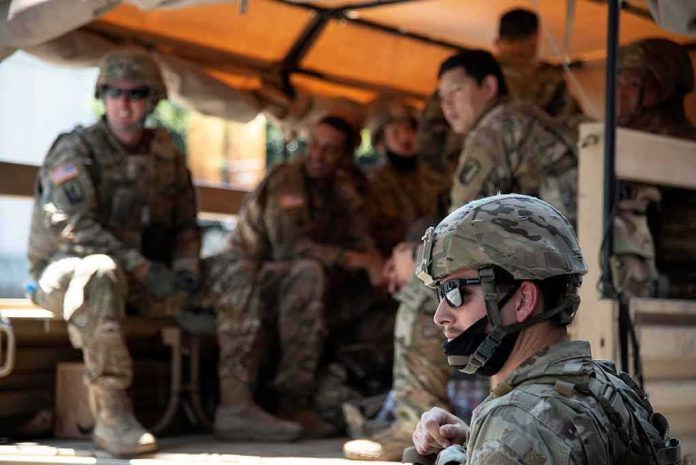
After years of warnings about unsafe barracks, commanders now face a hard, rapid relocation push when conditions threaten troops’ health and safety.
Story Snapshot
- Federal reviews documented mold, broken fire systems, sewage, and failed climate control in barracks across multiple bases.
- Leaders moved units out of unsafe housing before, showing relocation is a real and immediate remedy.
- Military officials say poor housing harms morale and readiness, justifying fast action.
- A huge maintenance backlog complicates quick fixes and strains capacity for safe moves.
What sparked the new push to move troops fast
A sweeping Government Accountability Office review in 2023 found unsafe or inadequate barracks conditions at every base it inspected. Teams documented mold in all ten locations, repeated heating and air failures, water problems at half, and broken or malfunctioning fire protection in several buildings. Investigators said some facilities did not meet minimum standards for assignment or occupancy. They warned that these problems could risk service members’ health and safety and undermine readiness if left in place.
Reports also captured specific hazards that go beyond comfort issues. Service members and base records described sewage overflows, inoperable fire systems, doors and windows that did not lock, and extreme heat or cold due to failed climate control. Some residents reported bedbugs and trouble breathing in damp rooms. Lawmakers pressed the Pentagon on these failures, asking how commands would move people out of danger and prevent repeat breakdowns after emergency relocations.
How relocation has worked on the ground before
Recent actions show that leaders can order fast moves when conditions cross a clear safety line. After a senior visit to a barracks on Guam, the Navy directed sailors and Marines to move out of Palau Hall within ten days. A three-star admiral called the conditions “clearly unacceptable,” ordered new inspections, and told commanders to place personnel in safe housing when existing buildings were poorly maintained. That response set a concrete pattern for quick relocation when risks appear.
Military leaders have also put quality-of-life promises on paper. The Navy’s unaccompanied-housing bill of rights says sailors are entitled to a living space that is safe, secure, and meets health and environmental standards, with working utilities. That standard recognizes that housing is not a perk; it is part of readiness. When rooms fail that test, leaders now have a public baseline to justify immediate moves, even when repairs are planned or underway.
The scale of the problem and why speed is hard
The Department of Defense faces a massive facility backlog that has built up over many years. Government reviews estimate hundreds of billions of dollars in deferred maintenance across installations. Analysts reported that many barracks are “chronically neglected,” and that the department has not requested full funding to keep pace with needs. These resource gaps make fast relocations more complex, since spare rooms, hotel contracts, and temporary options may already be tight at many bases.
🔴 Pentagon orders temporary housing for troops in unsafe barracks within 24 hours
Secretary of Defense Pete Hegseth directed military services on November 10 to provide temporary lodging on or off base for troops living in barracks with "emergency conditions" posing health or… pic.twitter.com/FTjr4ExrGI
— NewsTongue (@NewsTongueX) November 16, 2026
Congressional budget plans in recent years have aimed more money at barracks and critical safety upgrades. Leaders have said installation safety and barracks improvements are top priorities in military construction. But even with new funding, officials noted that only a fraction of poor or failing buildings could be addressed within a few budget cycles. This mix—urgent safety needs and limited capacity—means commanders must triage, move people out of the worst cases, and then work down a long list.
What this means for service members and families
For troops, a fast move can feel disruptive, but it can also prevent illness or injury and restore basic dignity. Clear thresholds matter. When sewage backs up, when fire alarms do not work, or when black mold spreads, the call should be simple: move people now, fix buildings next. The record shows that poor housing hurts morale and retention. Speedy relocation, paired with honest timelines for repairs, respects both the mission and the people who carry it.
For families and taxpayers, transparency will be key. Commands should share inspection results, explain why a building is unsafe, and show where people are going next. They should track outcomes so that a move is not just a change of address but a real improvement in safety. America asks a lot of its service members. Safe housing is a basic promise the government must keep, regardless of politics or budgets.
Bottom line for a frustrated public
Americans across the political spectrum see the same pattern: slow maintenance, rising costs, and leaders who often respond only after a crisis. The documented hazards are not abstract—they are sewage, heat, mold, and broken fire systems where young Americans sleep. When those risks appear, swift relocation is common sense. The country can argue over funding levels and priorities. It should not argue over whether troops deserve safe rooms and working alarms tonight.