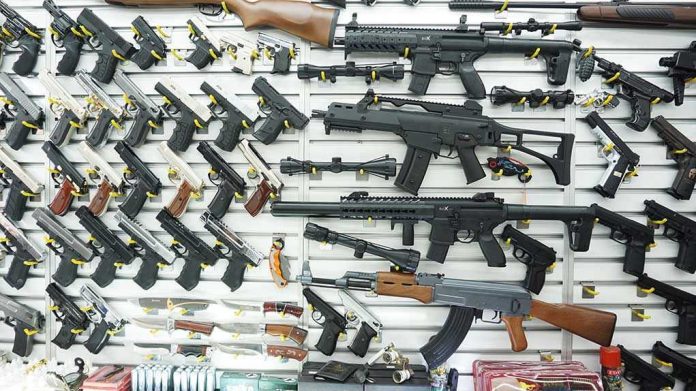
New Mexico’s gun control debate heats up as Democrats propose tighter regulations on firearms dealers in response to alarming crime data.
Story Snapshot
- New Mexico Democrats plan to introduce legislation for increased oversight on gun stores.
- Over 75% of crime guns in New Mexico are linked to in-state dealers, according to a report.
- Republicans and gun store owners argue existing laws are sufficient and new measures could harm businesses.
- Governor’s past emergency order on gun violence sets a strong precedent for future regulations.
Democratic Push for Stricter Regulations
New Mexico Democrats, armed with a 2023 report from Everytown for Gun Safety, propose legislation targeting firearms dealers with increased security measures, inventory tracking, and employee training. The report highlights a staggering 75% of crime guns originating from local stores, with the state suffering an average of 526 firearm-related deaths annually. This legislative push positions dealers as central figures in tackling gun violence, moving the focus from gun owners to the sellers who supply them.
Republican opposition is fierce. They argue that existing federal regulations, including ATF inspections and background checks, are sufficient. Gun store owners, like Keith Bledsoe, view the proposed measures as a “stranglehold” on businesses that already comply with significant federal oversight. They emphasize that these additional state regulations are redundant and threaten the viability of small businesses, which are crucial to New Mexico’s economy.
Historical Context and Precedents
Gun control has been a contentious issue in New Mexico for years, exacerbated by rising violent crime rates. In 2023, Governor Michelle Lujan Grisham declared gun violence a public health emergency, leading to a temporary ban on carrying firearms in certain areas. This move was upheld by the state Supreme Court in 2025, setting a precedent for future gun control measures. The Democratic push for dealer regulations builds on these past efforts, seeking to address gun violence through targeted legislative action.
Previous legislative attempts, such as the 2025 proposal to ban certain semi-automatic firearms, have faced significant opposition and have not been successful. However, the focus on firearms dealers, rather than outright bans on gun types, represents a strategic shift by Democrats to address the source of crime guns directly.
Stakeholders and Power Dynamics
The legislative battlelines are clear. Democrats, who hold a majority, are poised to introduce this bill in the upcoming 2026 session, bolstered by the Governor’s prior actions and Everytown’s data. Representative Andrea Romero leads the charge, citing the need for stricter dealer oversight to curb gun violence. Meanwhile, Republicans like Senator Crystal Brantley argue for focusing on repeat offenders and juvenile crime instead of burdening lawful dealers.
The National Rifle Association (NRA) and the New Mexico Shooting Sports Association stand firmly against the proposed regulations, advocating for enforcement of existing laws. They emphasize the importance of accurate data and question the effectiveness of targeting dealers rather than offenders. These organizations play a crucial role in shaping public opinion and mobilizing opposition to what they view as unnecessary and overreaching legislation.
Current Developments and Future Implications
As the 2026 legislative session approaches, Democrats confirm their intent to introduce this dealer-focused bill, which includes training and licensing expansions. Public commentary is divided, with critics arguing that the measures miss the mark on public safety by overlooking the root causes of crime, such as repeat offenders and inadequate law enforcement.
The potential impact of this legislation is significant. In the short term, firearms dealers may face increased compliance costs, which could slow down sales and impact business operations. Long-term effects could include business closures and reduced in-state firearm supply, potentially driving sales to neighboring states with less stringent regulations. This would not only affect small businesses but also law-abiding gun owners who may find access to firearms more restricted.