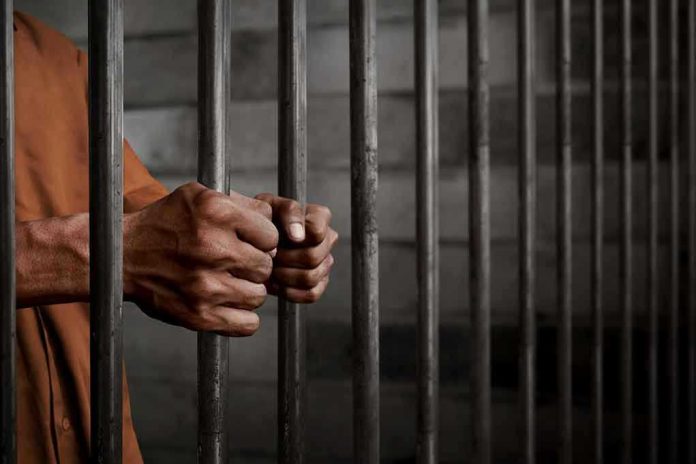
A convicted sex offender used a California taxpayer-funded prison tablet to groom a 12-year-old girl, and that is just one of the stories buried inside Governor Gavin Newsom’s $189 million experiment in what his administration calls “digital equity” for inmates.
Story Snapshot
- California spent $189 million to distribute approximately 90,000 tablets to every state prison inmate beginning in August 2021
- Death row inmates and convicted sex offenders have reportedly used the devices to access pornography and send explicit messages
- A named sex offender, Nathaniel Ray Diaz, allegedly used his prison tablet to contact and exploit a 12-year-old girl while incarcerated
- The California Department of Corrections and Rehabilitation described the tablets as “tightly controlled education tools” — a claim the evidence directly contradicts
What California Told Taxpayers the Tablets Were For
The California Department of Corrections and Rehabilitation (CDCR) framed the tablet program as a rehabilitation initiative, promising the devices would give inmates access to educational resources, re-entry programs, religious texts, and family communication. The word “tightly controlled” appeared in official descriptions. The program was also pitched under the banner of “digital equity” for what state documents called “justice-impacted” individuals. At $189 million, California taxpayers funded what amounted to a universal device rollout for every person sitting in a state prison. [1]
Rehabilitation goals in prison technology programs are not inherently wrong. Inmates who maintain family contact and develop job skills do statistically show lower recidivism. The problem is not the idea. The problem is what happens when an institution announces “tight controls” and then cannot demonstrate those controls exist in any meaningful, enforceable way. That gap between the press release and the prison yard is where this story lives. [2]
What Inmates Are Actually Doing With the Devices
Investigative journalist Christopher Rufo reported in City Journal that multiple death row inmates told the California Post they used the tablets to receive explicit photos and watch pornographic material. Robert Mory, a convicted rapist and serial murderer known as the “tipster killer,” admitted to receiving nude photographs through the device. These are not anonymous allegations — they are named individuals, on death row, describing how they circumvented a program California officials called tightly controlled. [1][2]
The more alarming case involves Nathaniel Ray Diaz, a convicted sex offender who allegedly used his prison-issued tablet to contact and groom a 12-year-old girl while behind bars. If the CDCR’s controls were functioning as advertised, a registered sex offender would not have had the ability to reach a child on the outside. The fact that he reportedly did is not a minor oversight — it is a catastrophic failure of the program’s most basic security premise. [3]
The Pattern California Refuses to Learn From
This is not the first time a correctional technology program has launched with rehabilitation rhetoric and collapsed under the weight of predictable misuse. The cycle has repeated across American prison systems for two decades. Agencies introduce communication technology with stated rehabilitation goals, the technology enables unintended and harmful uses, a media investigation surfaces specific cases, and the institution falls back on claims of “tight controls” while releasing no monitoring data to back that up. California is not breaking new ground here — it is simply running the same play with a larger price tag. [1][2]
What makes California’s version particularly hard to defend is the fiscal context. The Los Angeles Fire Department is pushing a new sales tax proposal to secure basic funding. [5] Newsom’s diaper giveaway program is drawing fire over costs and political connections. [4] Against that backdrop, $189 million for prison tablets that sex offenders use to contact children is not a defensible line item. Common sense and basic fiduciary responsibility demand the same question: who approved this contract, who monitors compliance, and why is no one being held accountable for the results?
The Accountability Question No One in Sacramento Is Answering
The CDCR has not released comprehensive data on how many misuse incidents have been documented, how many devices have been confiscated, or what monitoring infrastructure actually exists. Rufo’s reporting forced the story into public view, but California’s political leadership has not produced a credible response to the specific named cases. When a government agency spends $189 million of public money, promises tight controls, and then cannot explain how a convicted sex offender used the program to target a child, the burden of proof is entirely on the agency — not the critics. [1][3]
The rehabilitation argument deserves a fair hearing when it is backed by accountability, transparency, and verifiable outcomes. It deserves none of those things when it is used as a shield against legitimate oversight. California handed nearly 90,000 inmates a connected device, called it equity, and apparently hoped for the best. A 12-year-old girl paid part of that price. [2][3]
Sources:
[1] Web – Newsom’s $189M Taxpayer-Funded Prison Tablet Program Rocked …
[2] Web – Report: CA Spent Nearly $189 Million to Give Every State Prisoner …
[3] Web – Gavin Newsom Gave California Prisoners Almost $200 Million Worth …
[4] Web – Newsom’s Free Diaper Program Sparks Questions Over Cost …
[5] Web – LAFD Needs More Funding (05/13) – The John Kobylt Show – iHeart